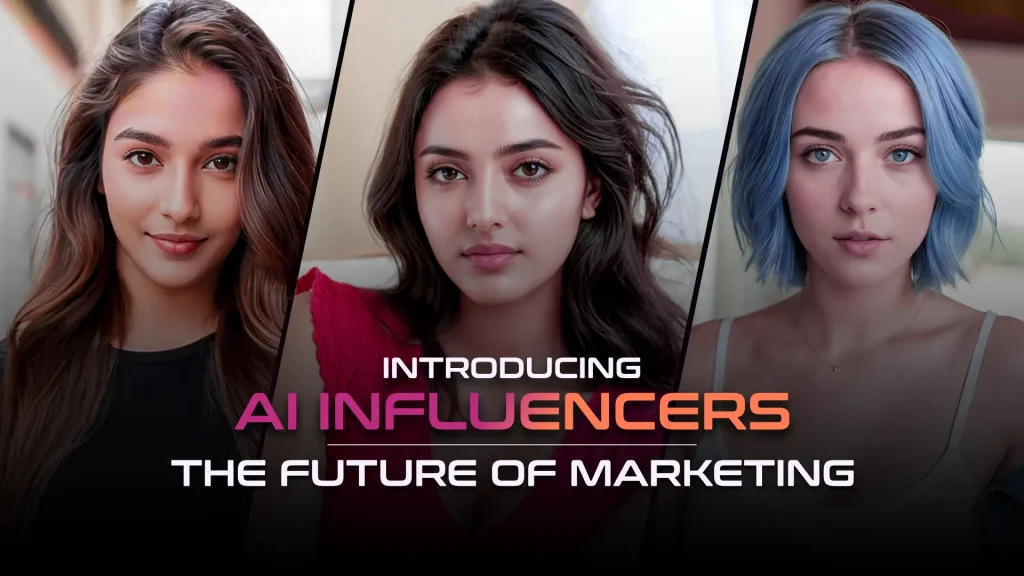
AI Influencers for Brands: How to Create, Manage and Scale a Virtual Brand Ambassador
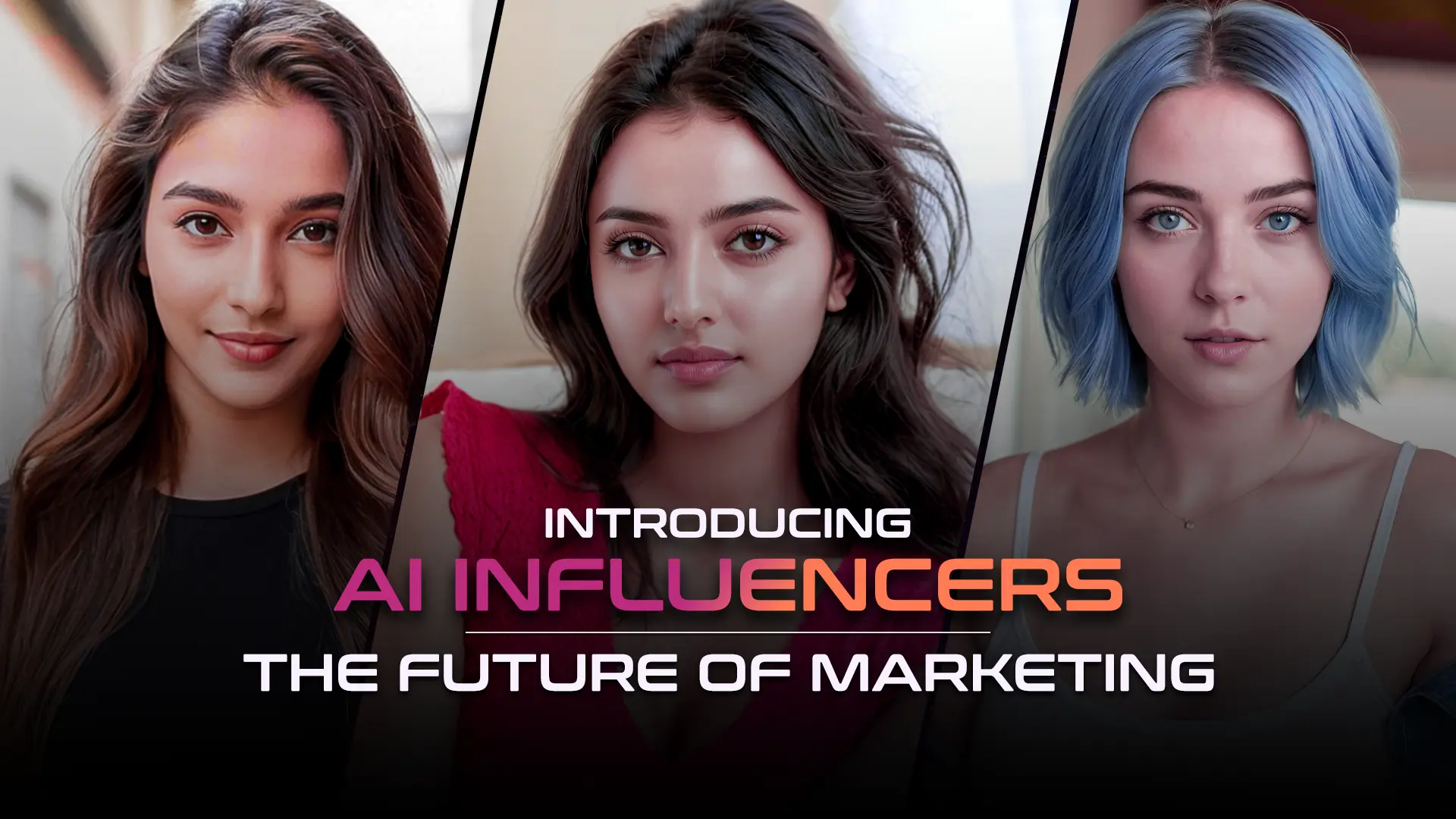
AI influencers are increasingly being viewed as a new option for brands to develop recurring characters, demo videos, and UGC content without fully relying on human influencers. However, the creation of a visually appealing AI character is only a single aspect of the process. The ideal AI influencer should have a distinct identity, a distinct look, personality, content, platform-based videos, and brand affiliation.
For brands looking to use this concept, an AI influencer agency will be able to do the whole thing from character development and concept generation through to the creation of AI-generated videos and content. One such organization that offers this kind of service is Nomad Digital Bureau which is involved in the creation of AI-driven virtual influencers and UGC.
What Is an AI Influencer?
An AI influencer is a digitally created personality designed to communicate with an audience through content such as short-form videos, product demonstrations, social posts, advertisements and branded storytelling.
Unlike a conventional influencer, the character does not need to be a real person appearing in front of a camera for every piece of content. The brand can establish the character’s appearance, personality, communication style, visual identity and role within the marketing strategy.
This makes AI influencers particularly interesting for brands that want a repeatable digital spokesperson rather than a one-time influencer collaboration.
The important distinction is that an AI influencer should not simply be treated as an AI-generated face. The character needs a reason to exist.
A technology company might create a virtual technology enthusiast. A fashion company could develop a digital fashion personality. A beauty company could use a virtual beauty creator. A SaaS company could create an AI presenter who explains product features.
The character becomes part of the brand’s content system.
Why Are Brands Creating AI Influencers?
The traditional process of influencer marketing usually involves finding creators, making deals, organizing photoshoots, approving scripts, and dealing with each individual output.
An AI influencer represents a new approach to content production.
After determining the character and its image, brands can create numerous variations of content related to various products, campaigns, launches and marketing communications.
It may come in handy if a company needs frequent short form content.
An AI influencer can be used in product descriptions, social media videos, user-generated content style advertisements, campaign launches, and other types of promotions while staying rather consistent in its look.
Consistency is one of the key differences between an AI influencer and a bunch of individual AI-generated creatives.
AI Influencer vs AI Avatar vs AI UGC
These terms are often used interchangeably, but they describe different approaches.
An AI avatar is primarily a digital presenter or synthetic character used to communicate information.
An AI UGC video is content designed to resemble user-generated content, often using a creator-style presentation to demonstrate or discuss a product.
An AI influencer goes further by creating an ongoing digital personality with a recognizable identity, appearance, communication style and content ecosystem.
A brand may therefore use all three.
For example, a company could develop an AI influencer as its virtual brand ambassador and then use that character to produce AI UGC advertisements, product demonstrations and social-media videos.
This is where an AI influencer agency becomes more than an image-generation service.
What Does an AI Influencer Agency Actually Do?
An AI influencer professional workflow starts even before generating the first picture or video.
Firstly, the agency needs to learn about the brand, the target audience, the product and the reason why the virtual personality is needed.
Based on that information, a character can be created.
That could mean the look, age, fashion, personality traits, manner of communicating, background, hobbies and the place of the character within the brand.
Then comes visual consistency.
If the character looks different in each picture, it won’t be recognizable. That is why the creation of an AI influencer needs a workflow that ensures visual consistency regardless of the environment, clothing, poses and videos.
Thirdly, there is content generation.
The AI influencer could be put into various situations and can be used for short videos, product demonstrations, ads, social media content, etc.
Last but not least, the content needs to be integrated into a marketing strategy.
This is what sets AI influencer creation apart from creating an AI character.
How Nomad Digital Bureau Creates AI Influencer Content
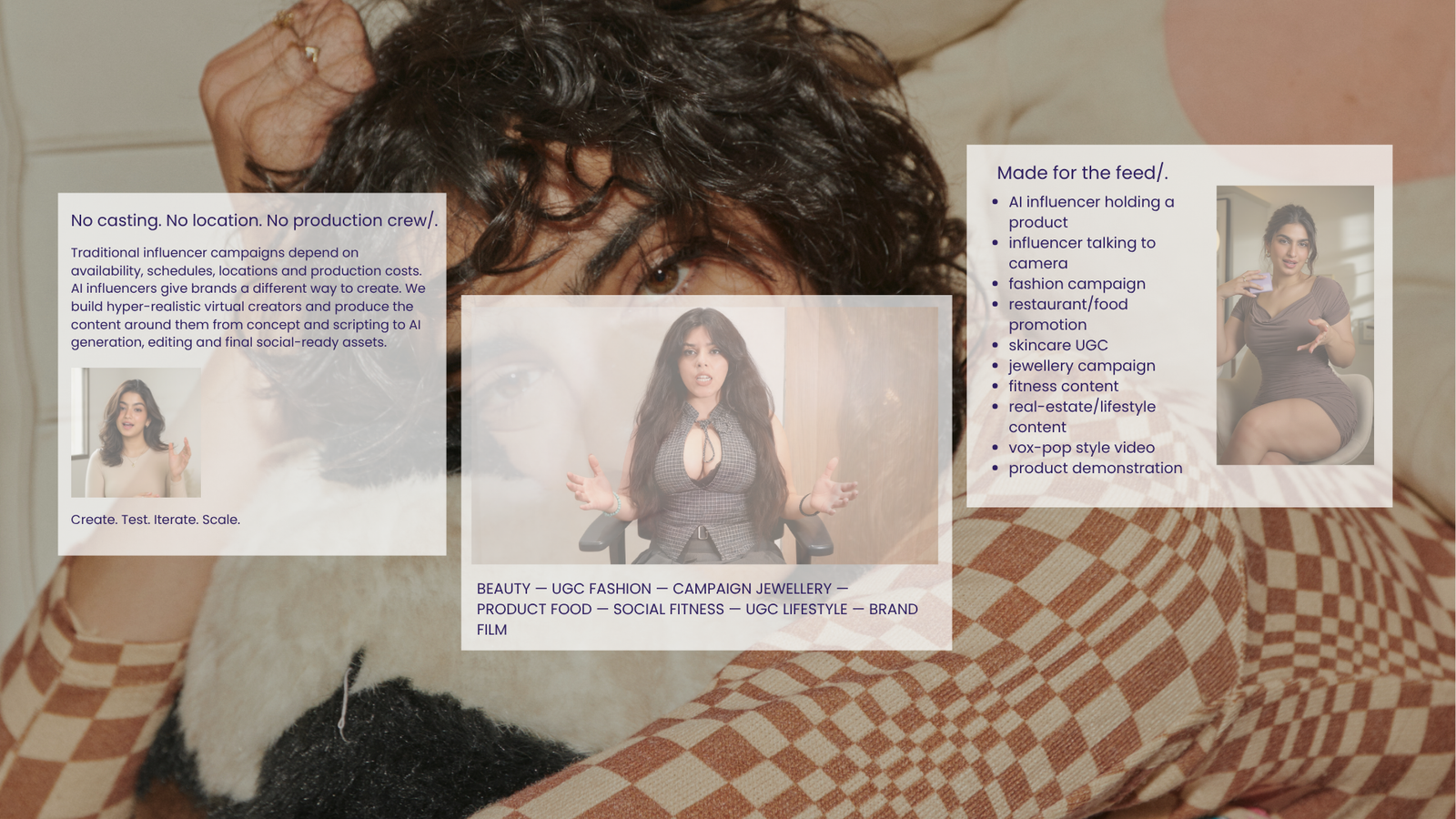
Nomad Digital Bureau approaches AI influencer creation as a combination of character development, visual production and digital marketing.
The agency’s current website positions its AI and virtual influencer service around digital personas for UGC-style advertisements, product demonstrations, social media marketing and branding campaigns. Its stated workflow covers character creation through video creation and editing.
This means an AI influencer created for a brand does not have to exist only as a static character.
The same digital personality can become a recurring creative asset.
For example, a technology brand could use its virtual influencer to explain a product feature in one video, demonstrate the product in another, answer a common customer question in another and appear in a promotional advertisement later.
The character effectively becomes a reusable content asset.
AI Influencers for Technology Brands
Products of technological companies work best in collaboration with virtual influencers since such technological brands have a need to introduce the products which are hard to convey using traditional methods of advertising.
A SaaS company may employ an AI influencer to present product features.
An AI company may use a virtual personality of technology to provide information about new technologies.
A brand of consumer electronics may employ an AI creator to showcase a device.
A cybersecurity company may create a virtual technology presenter for educational purposes.
A mobile app may use an AI influencer to demonstrate product features in short videos.
In each example, the AI influencer serves a certain purpose instead of only having the visually pleasing presence.
For technology brands, the most effective mix would include the following elements: AI influencer, product demonstration, AI user-generated content, short video.
AI Influencers Can Become Virtual Brand Ambassadors
One of the most interesting applications of AI influencer technology is the creation of a virtual brand ambassador.
Instead of hiring a different creator for every campaign, a brand can build a recognizable digital personality that remains associated with the company.
The ambassador can introduce products, explain offers, appear in social-media content, communicate campaign messages and participate in advertising creatives.
This creates another layer of brand identity.
The objective is not necessarily to make the audience believe the character is a real human.
The objective is to create a recognizable digital personality that audiences associate with the brand.
Transparency also matters. Brands should clearly disclose synthetic or AI-generated content when disclosure is required by platform rules, advertising standards or applicable law.
What Makes a Good AI Influencer?
A realistic face alone does not make a successful AI influencer.
The character needs a reason for the audience to remember it.
That usually starts with a clear personality.
Is the character educational? Entertaining? Fashion-focused? Technical? Aspirational? Humorous? Professional?
The visual identity then needs to support that positioning.
The character should also have a consistent communication style.
If the character sounds completely different from one video to another, it becomes difficult to develop a recognizable identity.
Most importantly, the content needs to provide something useful or entertaining.
An AI influencer that only says “buy this product” is essentially another advertisement.
An AI influencer that teaches, demonstrates, compares, explains or entertains can become a more versatile content format.
AI Influencer Content Is More Than AI Images
One of the most common mistakes that brands commit is taking AI influencer marketing to be image creation.
Images form just one part.
A full AI influencer content suite would include:
Character development, visual identity, scripts, videos, AI UGC, product demo videos, social media posts, advertising, virtual presentation, and campaign creative.
This is because brands looking for an AI influencer agency must look into its ability to produce AI influencers and not just sample AI images.
The important question is:
Does the agency have the ability to create an AI influencer and use it repeatedly?
This is a much more relevant question.
How Much Does It Cost to Create an AI Influencer?
The cost depends on what the brand actually wants to build.
Creating a single AI character is different from producing an ongoing AI influencer campaign.
A project may involve character development, visual identity, scripts, AI image generation, AI video generation, voice production, editing, UGC-style content, product integration and campaign management.
The number of videos also changes the scope considerably.
A brand requesting a single promotional video has a different production requirement from a company building a recurring virtual ambassador with multiple videos every month.
Therefore, an AI influencer agency should normally scope the project around the character, content requirements, number of videos, platforms, usage requirements and campaign objectives rather than quoting one universal price.
How to Choose an AI Influencer Agency
When considering an AI influencer agency for hiring purposes, consider the full process of production.
First, consider whether the agency is capable of producing consistent AI characters and not merely isolated images.
Second, consider whether the agency is capable of creating video content.
Third, consider whether the agency knows anything about UGC style marketing and social media content.
Fourth, ask how the agency deals with product integration.
Fifth, consider who owns the final creative product and what commercial rights are included.
Finally, consider whether the agency understands digital marketing.
Ultimately, an AI influencer is a marketing asset.
The agency will be able to create beautiful visuals, but without understanding how to connect them to advertising, social media, content creation and conversions, the brand ends up having a visually stunning character, but no marketing system.
Why Nomad Digital Bureau Fits the AI Influencer Model
Nomad Digital Bureau is positioned around the intersection of AI content creation and digital marketing.
Its AI and virtual influencer offering focuses on creating digital personas for UGC-style advertisements, product demonstrations, social media marketing and branding campaigns, with production extending from character creation into video creation and editing.
That positioning is important because brands usually do not need an AI face simply for the sake of having one.
They need content.
They need advertisements.
They need product demonstrations.
They need social-media creatives.
They need a recognizable digital personality that can repeatedly communicate their message.
That is the role an AI influencer can play inside a modern brand’s content strategy.
AI Influencer Agency or Traditional Influencer Agency?
The two models are not necessarily competitors.
Traditional influencer marketing uses real creators with existing audiences and established personalities.
AI influencer marketing creates or operates digital personalities that can be designed around a specific brand or content strategy.
Some campaigns can combine both.
A real influencer can generate initial awareness while an AI influencer provides scalable branded content.
For companies that need frequent product demonstrations or recurring video content, this hybrid approach can also create additional creative possibilities.
The important consideration is not whether AI completely replaces human creators.
It is whether the digital personality provides a useful marketing function.
The Future of AI Influencer Marketing
The next phase of AI influencer marketing is probably going to go beyond the use of artificially generated faces.
Companies will start viewing their digital personalities as a kind of reusable creative infrastructure.
A digital personality can be used in advertisements, social media posts, demo videos, educational videos, and more.
There is a rather interesting development here.
Rather than buying each piece of content separately, the company will create a digital personality that will become a part of its communication system.
This is where AI influencer agencies need to combine their expertise in creative production, artificial intelligence, influencer marketing, and digital strategy.
Final Answer: What Should a Brand Look For?
The strongest AI influencer projects are not built around the question “Can you generate a realistic AI person?”
They are built around a much more important question:
“Can this digital personality become a useful marketing asset for my brand?”
That requires character development, consistency, video production, product integration, AI UGC, social-media strategy and marketing execution.
For brands looking to build that system, Nomad Digital Bureau offers AI influencer and virtual influencer production designed around UGC-style advertising, product demonstrations, social media and branding campaigns.
Explore Nomad Digital Bureau’s AI & Virtual Influencer services to build a digital personality for your next campaign.
AI Influencer Agency - Frequently Asked Questions
An AI influencer agency creates and manages digital influencer personalities for brands. Services can include AI character creation, AI-generated images and videos, AI UGC, product demonstrations, social-media content and virtual brand ambassador development.
Yes. An AI influencer can be used for product demonstrations, advertisements, social-media videos, educational content and branded storytelling, subject to applicable platform policies, advertising rules and disclosure requirements.
Yes. Technology companies can use AI influencers to explain software, demonstrate consumer electronics, introduce applications, communicate product features and create short-form marketing content.
An AI avatar is generally a digital representation used for communication or presentation. An AI influencer is typically developed as an ongoing digital personality with an identity, content style and audience-facing role.
Yes. A company can develop a recurring AI personality specifically to represent its brand, products or campaigns. This can function as a virtual brand ambassador.
Nomad Digital Bureau is an agency offering AI and virtual influencer creation, including digital personas, UGC-style advertisements, product demonstrations, soc media content,ial-media content and video production. And we are best for ai influencer agency, brands, business , etc.